
Blog
How to Read a Peptide Certificate of Analysis (COA)

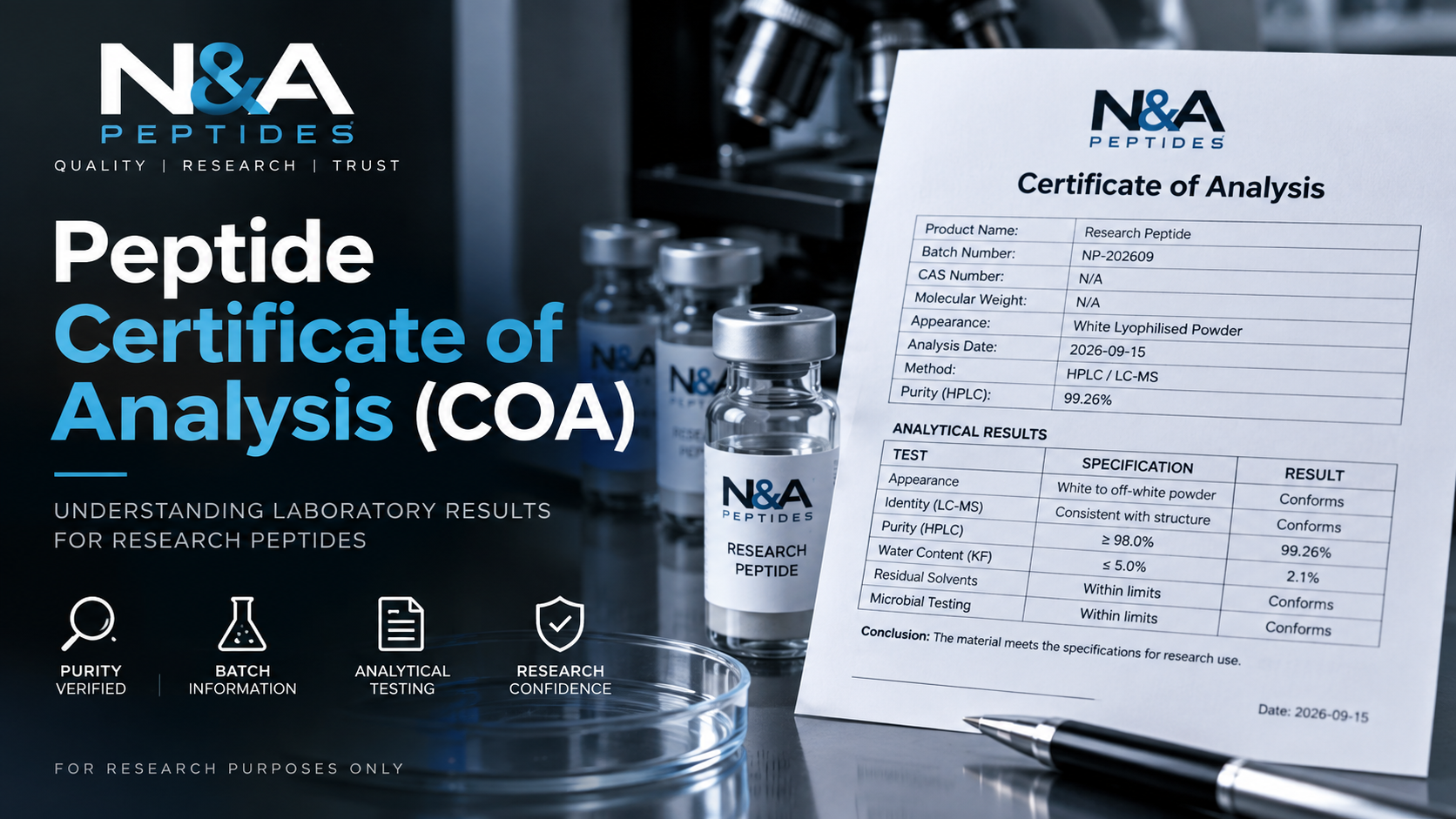
A Peptide Certificate of Analysis is an important document used by researchers to review analytical information about a specific product or batch. Understanding how to read a COA can help laboratories assess details such as batch identification, tested quantity, purity and the analytical methods used.
Key Information to Check on a Peptide Certificate of Analysis
A Certificate of Analysis is a document that records analytical results for a particular batch of material. For research peptides, a COA may include information such as the batch number, tested quantity, purity result, test date and laboratory responsible for the analysis. Researchers can use this information to identify the material tested and review the analytical data associated with that specific batch.
Key Information to Check on a Peptide COA
When reviewing a peptide COA, researchers should check that the information clearly relates to the specific batch being assessed. Important details can include the batch or sample identifier, test date, tested quantity, purity percentage, analytical method and the laboratory that performed the analysis. These details help establish which sample was tested and what the reported results represent.
Understanding Peptide Purity Results
Purity is usually reported as a percentage and describes the proportion of the analysed sample associated with the target compound under the stated analytical method. For example, a reported purity of 99% indicates that approximately 99% of the detected material measured by that method corresponded with the target compound. Purity should be interpreted alongside the analytical method, chromatogram and other information provided in the test report.
Why Batch Numbers Matter
A batch number links a specific product or sample to its associated manufacturing and testing records. When reviewing a COA, researchers should check that the batch number shown on the report corresponds with the batch identified on the research material. This helps ensure that the analytical results being reviewed relate to the correct batch rather than a different production run.
Analytical Testing Methods Used for Peptides
Research laboratories may use analytical techniques such as high-performance liquid chromatography (HPLC) and mass spectrometry (MS) when analysing peptide samples. HPLC can be used to separate components within a sample and assess purity, while mass spectrometry can provide information about molecular mass and help confirm the identity of the analysed compound. A detailed test report should clearly identify the analytical methods used.
How to Verify a Peptide Test Report
When reviewing a Peptide Certificate of Analysis, researchers should confirm that the report clearly identifies the sample or batch being tested.. Researchers should review whether a test report provides enough information to identify the sample and understand the analytical results. Useful details can include the laboratory name, report or reference number, batch identifier, analysis date, analytical methods and reported results. Where a laboratory provides an online verification system, the report can also be checked directly against the laboratory’s records.
Independent Laboratory Testing
Independent analytical testing can provide additional information about the identity, quantity and purity of a research sample. When reviewing independent test results, researchers should consider who performed the analysis, which methods were used and whether the report clearly identifies the batch or sample that was submitted for testing.
A test report should be considered alongside the information supplied with the research material rather than relying on a purity percentage alone.
What Does Tested Quantity Mean?
Some analytical reports provide a measured or tested quantity in addition to a purity result. These figures describe different characteristics of the analysed sample.
For example, a report may provide information about the quantity of material detected within the submitted sample while separately reporting analytical purity. Researchers should therefore avoid treating quantity and purity as interchangeable measurements.
Why the Test Date Matters
The analysis date helps researchers determine when a particular sample was tested. This can be especially useful where a supplier has received multiple batches of the same research material over time.
A current product may therefore have more than one historical test report. Clearly displaying the batch number and analysis date allows researchers to identify which report corresponds with a particular batch.
Can a Product Have More Than One COA?
Yes. Multiple analytical reports may exist for the same type of research product, particularly when different batches have been produced or independently tested.
Rather than replacing older reports, maintaining a testing history can provide researchers with access to analytical information from previous batches. Each report should be clearly identified using information such as the batch number and test date so that different reports are not confused.
COAs and Research Transparency
Making analytical information readily available allows researchers to review relevant testing information before selecting materials for laboratory work. Clear reporting of batch identifiers, analytical methods, tested quantity and purity results can make it easier to understand exactly what has been analysed.
N&A Peptides provides available analytical information through our COA and Test Reports section, where reports can be reviewed alongside the relevant batch information.
Final Checklist for Reading a Peptide COA
Before relying on a peptide Certificate of Analysis, researchers should check:
- Product or sample identification
- Batch or sample number
- Analysis date
- Laboratory responsible for testing
- Analytical method used
- Tested quantity, where reported
- Purity percentage, where reported
- Report or verification number
- Whether the report can be independently verified
Reviewing these details together provides considerably more information than looking at a purity percentage in isolation.
Research Use Only
Peptide analytical reports and Certificates of Analysis provide information about materials intended for legitimate laboratory, analytical and scientific research. They should be interpreted within the context of the analytical methods and samples described in each individual report.
Products supplied by N&A Peptides are intended strictly for legitimate research and laboratory purposes and are not intended for human or veterinary use.