Blog
What Does 99% Peptide Purity Mean? A Guide to Peptide Testing

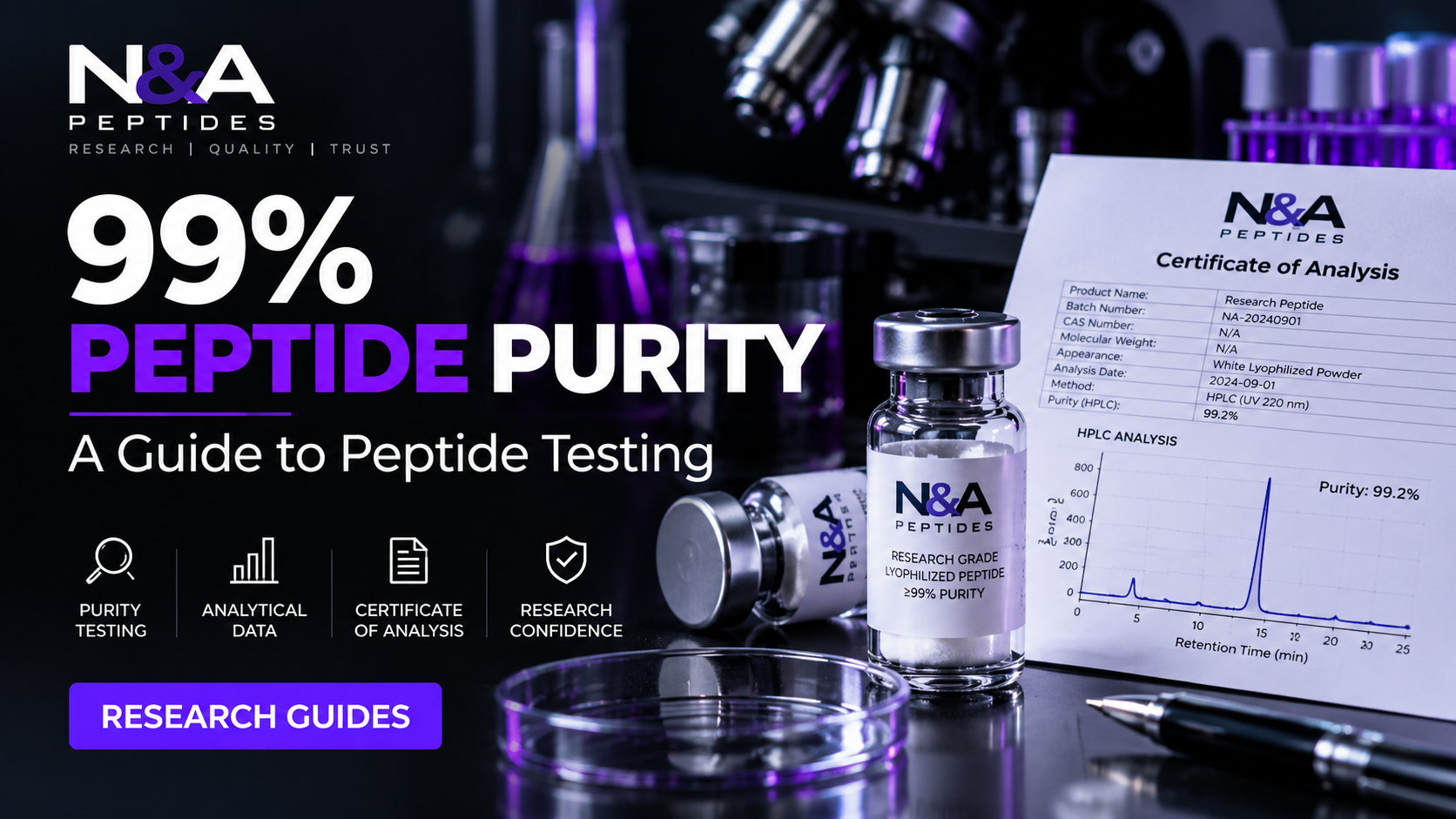
Peptide purity is one of the most important figures shown on a laboratory Certificate of Analysis (COA). A result such as 99% purity generally means that the tested sample was predominantly composed of the target compound under the analytical method used.
However, the purity percentage should not be viewed on its own. Researchers should also consider the testing method, batch information, analytical results and the laboratory that carried out the analysis.
How Is Peptide Purity Tested?
Peptide purity is commonly assessed using analytical techniques such as High-Performance Liquid Chromatography (HPLC).
HPLC separates the different components present in a sample. The resulting chromatogram can then be used to estimate the proportion of the target peptide compared with other detectable substances.
A reported purity of 99% means the target compound represented approximately 99% of the measured chromatographic material under the conditions of that test.
What Does 99% Purity Actually Tell You?
A 99% purity result is generally considered a high analytical purity result.
It indicates that relatively few detectable impurities were present in the sample during testing. However, it is important to understand exactly what the figure represents.
Purity does not automatically confirm the total quantity of peptide present in a vial. It also does not necessarily confirm identity, sterility or the absence of every possible contaminant.
That is why a complete COA may include several different analytical results rather than a single purity percentage.
Purity vs Peptide Content
Purity and peptide content are not necessarily the same measurement.
For example, a sample may test at 99% purity while the actual measured quantity of peptide differs slightly from the labelled amount.
Purity describes the proportion of the detected material that matches the target compound, while content or assay testing can provide information about the actual quantity present.
Understanding this difference can help researchers interpret laboratory reports more accurately.
Why Batch Numbers Matter
A batch number allows a particular product to be matched with its corresponding laboratory report.
This is especially important when multiple production batches exist because analytical results can vary between batches.
Researchers should check that the batch number shown on a COA matches the batch number associated with the product being reviewed.
This helps maintain traceability and makes it easier to verify which analytical report applies to a specific sample.
How to Read a Peptide COA
A typical peptide Certificate of Analysis may include information such as:
- Product or compound name
- Batch or lot number
- Testing date
- Purity percentage
- Analytical method
- Assay or content result
- Molecular information
- Laboratory details
A COA should be read as a complete analytical document rather than relying only on the headline purity percentage.
For a more detailed explanation, see our guide on How to Read a Peptide Certificate of Analysis (COA).
Why Third-Party Testing Matters
Independent third-party testing can provide additional confidence that analytical results have been produced by a laboratory separate from the supplier.
The value of any laboratory report depends on factors such as the testing method, traceability, sample identification and the reputation of the laboratory carrying out the analysis.
Where available, researchers should review the complete report and confirm that the batch details correspond with the product being assessed.
Final Thoughts
A reported peptide purity of 99% is a useful analytical indicator, but it should always be interpreted alongside the rest of the laboratory data.
Purity, assay results, batch numbers and testing methods all provide different pieces of information.
For laboratory research, reviewing the full Certificate of Analysis provides a much clearer picture than relying on the purity percentage alone.
For research purposes only.